
2026 Mazda3 Hatchback in Easley, SC
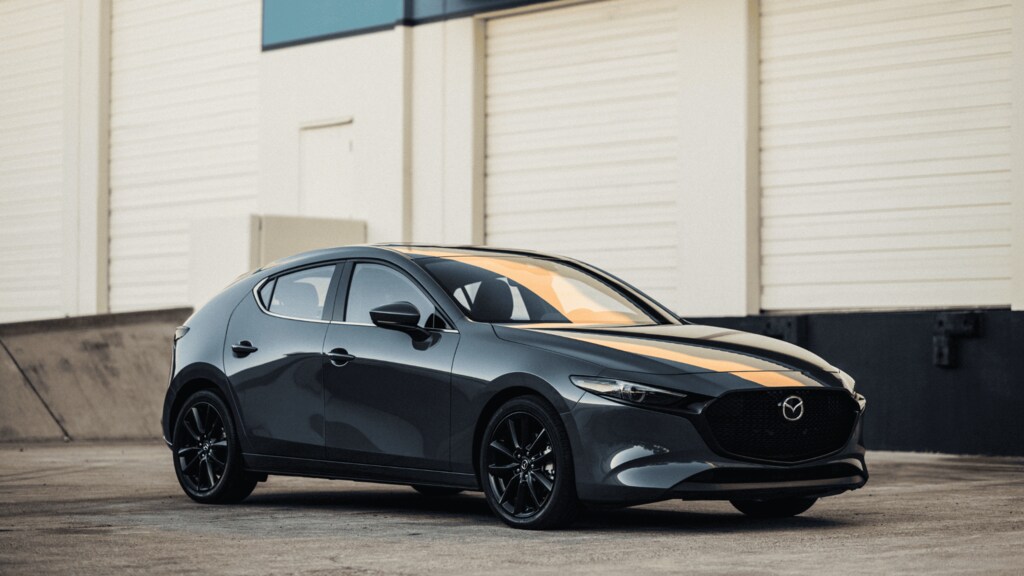
The 2026 Mazda3 Hatchback is engineered as a compact vehicle with a strong emphasis on mechanical efficiency, structural integrity, and integrated vehicle systems. Mazda continues to refine this model using its SKYACTIV® engineering philosophy, which focuses on optimizing every mechanical component to work as a cohesive system. The hatchback body configuration supports functional versatility while maintaining a controlled driving profile. The 2026 Mazda3 Hatchback remains focused on measurable performance attributes, advanced drivetrain configurations, and a comprehensive set of driver assistance technologies designed to support predictable operation across varied driving conditions.
Precision-Tuned Powertrain Architecture
The 2026 Mazda3 Hatchback is offered with two SKYACTIV®-G gasoline engine options. The standard engine is a 2.5-liter DOHC 16-valve four-cylinder unit equipped with direct fuel injection and variable valve timing. This naturally aspirated configuration produces up to 186 horsepower and 186 lb-ft of torque when operating on premium fuel. The engine is designed to deliver consistent power output across the usable RPM range while maintaining combustion efficiency through the brand's high compression design.
For increased output, select trims are equipped with the SKYACTIV®-G 2.5 Dynamic Pressure Turbo engine. This turbocharged powerplant is engineered to maximize torque delivery at lower engine speeds, producing up to 250 horsepower and 320 lb-ft of torque with premium fuel. The turbo system uses a dynamic pressure approach that optimizes exhaust gas flow to improve throttle response and reduce lag during acceleration. Both engines are engineered to meet LEV III and ULEV emissions standards.
Transmission options include the SKYACTIV®-Drive electronically controlled 6-speed automatic transmission. This unit incorporates a manual-shift mode and Sport mode to provide greater control over gear selection. Certain front-wheel-drive trims also offer a SKYACTIV®-MT six-speed manual transmission, featuring optimized gear ratios and a lightweight clutch assembly. The availability of the Mazda i-Activ AWD® system allows torque distribution to be adjusted based on driving inputs and road conditions, improving traction and directional stability.
Structural Balance and Driving Dynamics
The chassis of the 2026 Mazda3 Hatchback is engineered around SKYACTIV®-Vehicle Dynamics with G-Vectoring Control Plus. This system manages engine torque during cornering to enhance tire contact and vehicle balance. By subtly reducing torque during steering input and restoring it during exit, the system improves steering accuracy and reduces unnecessary body movement.
Front suspension duties are handled by a MacPherson® strut assembly with a stabilizer bar, while the rear suspension uses a torsion beam design. This configuration supports a balance between ride comfort and lateral stability. Electric Power Steering with rack-and-pinion geometry provides controlled steering response with consistent feedback across different speeds. The braking system includes power-assisted ventilated front disc brakes and solid rear disc brakes, supported by the Anti-lock Braking System, Electronic Brakeforce Distribution, and Brake Assist.

Functional Exterior Engineering
The exterior design of the 2026 Mazda3 Hatchback is shaped to support aerodynamic efficiency and operational functionality. The front fascia incorporates a gloss black grille designed to manage airflow while supporting engine cooling requirements. Adaptive LED headlights provide adjustable illumination based on steering input and vehicle speed, while LED daytime running lights enhance forward visibility.
Additional exterior features include a roof-mounted shark-fin antenna, a center high-mount brake light, and dual exhaust outlets that improve exhaust flow characteristics. Select trims feature a rear hatch spoiler designed to improve aerodynamic stability at higher speeds. Side mirrors are available with heating functionality, integrated LED turn indicators, and tilt-in-reverse capability to assist during low-speed maneuvers.
Wheel options include 16-inch or 18-inch aluminum alloy wheels paired with all-season tires. Tire sizes vary by trim, with configurations designed to balance grip, durability, and rolling efficiency. Windshield wiper systems include rain-sensing capability and a windshield wiper de-icer to support cold-weather operation.
Interior Configuration and Seating Systems
The interior of the 2026 Mazda3 Hatchback is configured to support driver focus and efficient space utilization. Seating capacity accommodates five occupants, with a 60/40 split rear seatback that folds down to expand cargo capacity. Front seating options include a 6-way manual driver seat or an available eight-way power-adjustable driver seat with lumbar support and memory functionality.
Seat materials vary by trim and include cloth, leatherette, and leather upholstery options. Heated front seats with three-level adjustment are available, providing controlled thermal output without altering seat structure. The steering wheel is tilt-and-telescopic and offered with heating functionality on select trims. Interior trim components include piano black, satin-plated, and bio-polycarbonate elements depending on configuration.
Sound insulation materials and structural bracing contribute to reduced cabin noise. Storage solutions include a center console armrest with covered compartments, door-mounted bottle holders, rear armrest cup holders, and an overhead sunglasses holder.
Integrated Infotainment and Connectivity Systems
Technology integration in the 2026 Mazda3 Hatchback is centered around the Mazda Connect™ infotainment system. The system is operated through a multifunction commander control and displayed on an 8.8-inch or available 10.25-inch full-color center display. Touchscreen functionality is enabled when using Apple CarPlay® or Android Auto™.
Wireless Apple CarPlay® and Android Auto™ support allow smartphone integration without physical connections. Bluetooth® hands-free phone and audio streaming are standard, while a Qi wireless charging pad is available on select trims. Alexa Built-In functionality supports voice interaction for navigation, media selection, and compatible vehicle functions.
Mazda Connected Services provide access to remote engine start, vehicle status monitoring, navigation services, and emergency support features, including automatic emergency dialing. USB-C audio input ports support device charging and media playback.
Instrumentation and Driver Information Displays
The 2026 Mazda3 Hatchback features a 7-inch LCD meter display that presents vehicle speed, fuel level, trip information, and system alerts. A Multi-Information Display provides data such as distance-to-empty, average fuel economy, current fuel economy, compass direction, and i-Activsense® system status.
Higher trims include an Active Driving Display projected onto the windshield. This display presents speed, navigation prompts, and traffic sign recognition information within the driver's forward field of view. The goal of this configuration is to reduce the need for drivers to shift focus away from the road.
Advanced Safety and Driver Assistance Technologies
Safety systems in the 2026 Mazda3 Hatchback are engineered to assist with awareness, collision mitigation, and vehicle control. Standard and available i-Activsense® features include Smart Brake Support with pedestrian, bicycle, and motorcycle detection. Rear Smart Brake Support and Rear Cross Traffic Alert provide additional coverage during reversing maneuvers.
Lane Departure Warning and Lane Keep Assist support lane awareness, while Blind Spot Monitoring enhances detection of adjacent vehicles. Mazda Radar Cruise Control with stop-and-go functionality supports adaptive speed management in highway and traffic conditions. Available Cruising and Traffic Support assists with steering and speed control during low-speed congestion.
The vehicle structure incorporates advanced airbag systems, including front, side, knee, and curtain airbags. Additional features include Driver Attention Alert, Rear Seat Alert, Vehicle Exit Warning, and an individual tire pressure monitoring system.
Hatchback Utility and Cargo Functionality
The hatchback configuration of the 2026 Mazda3 Hatchback supports practical cargo use without compromising vehicle balance. The rear cargo area includes integrated lighting and a cargo cover. The liftgate design allows for efficient loading of larger items, while the folding rear seatbacks expand usable cargo space when needed.
This configuration supports a range of daily use scenarios, including commuting, equipment transport, and extended travel, while maintaining consistent driving characteristics.
Visit McKinney Mazda in Easley, SC
Drivers interested in evaluating the engineering, drivetrain performance, and integrated safety systems of the 2026 Mazda3 Hatchback are encouraged to schedule a test drive at McKinney Mazda in Easley, SC. Experiencing the vehicle in operation provides direct insight into power delivery, steering response, and system integration. A test drive also allows drivers to assess infotainment usability, seating ergonomics, and visibility in typical driving conditions. Reviewing these technical features in motion can assist with understanding how the 2026 Mazda3 Hatchback functions as a complete system. Appointments can be scheduled to allow adequate time for a focused and uninterrupted evaluation.
Make an Inquiry
* Indicates a required field
